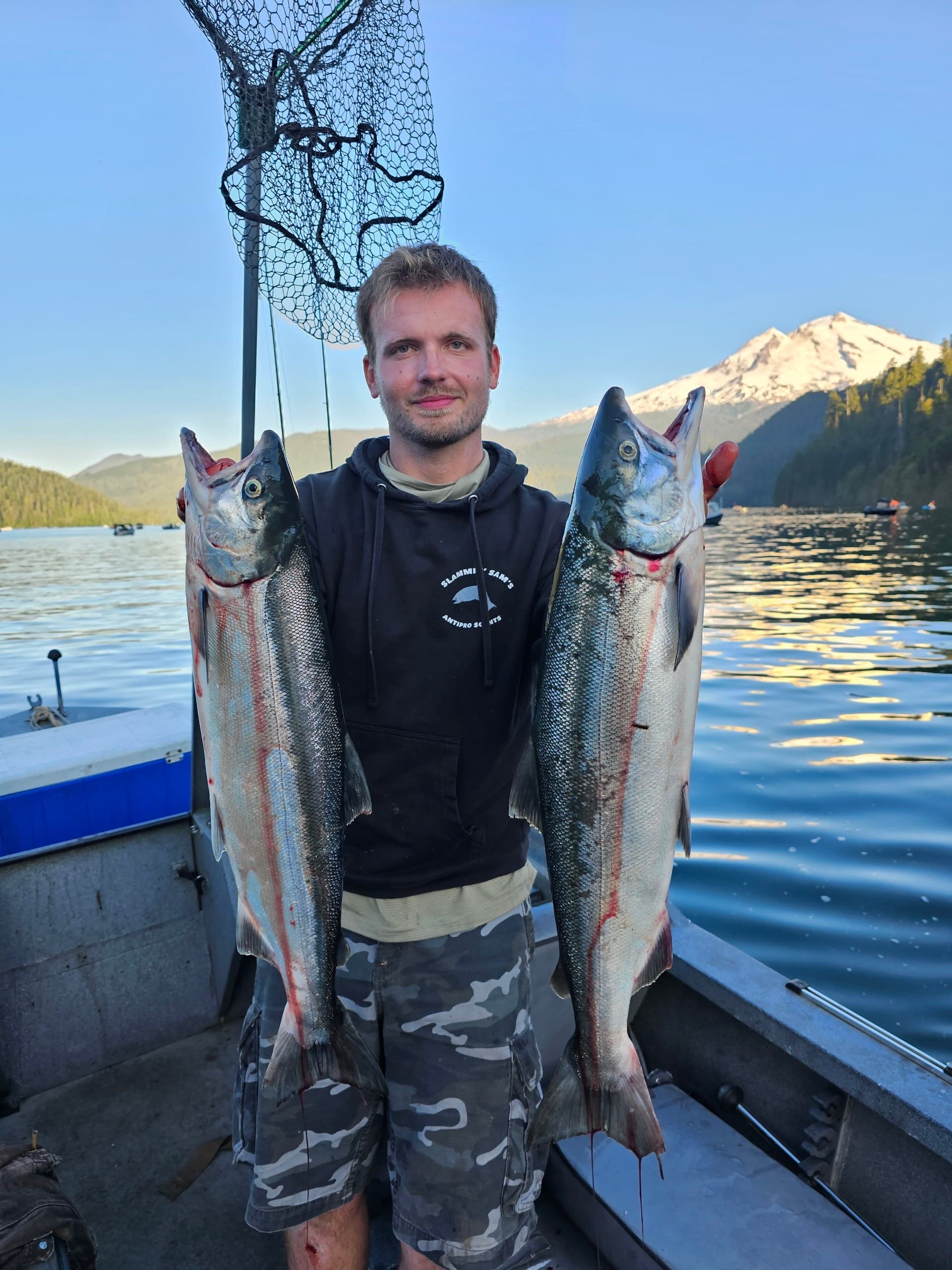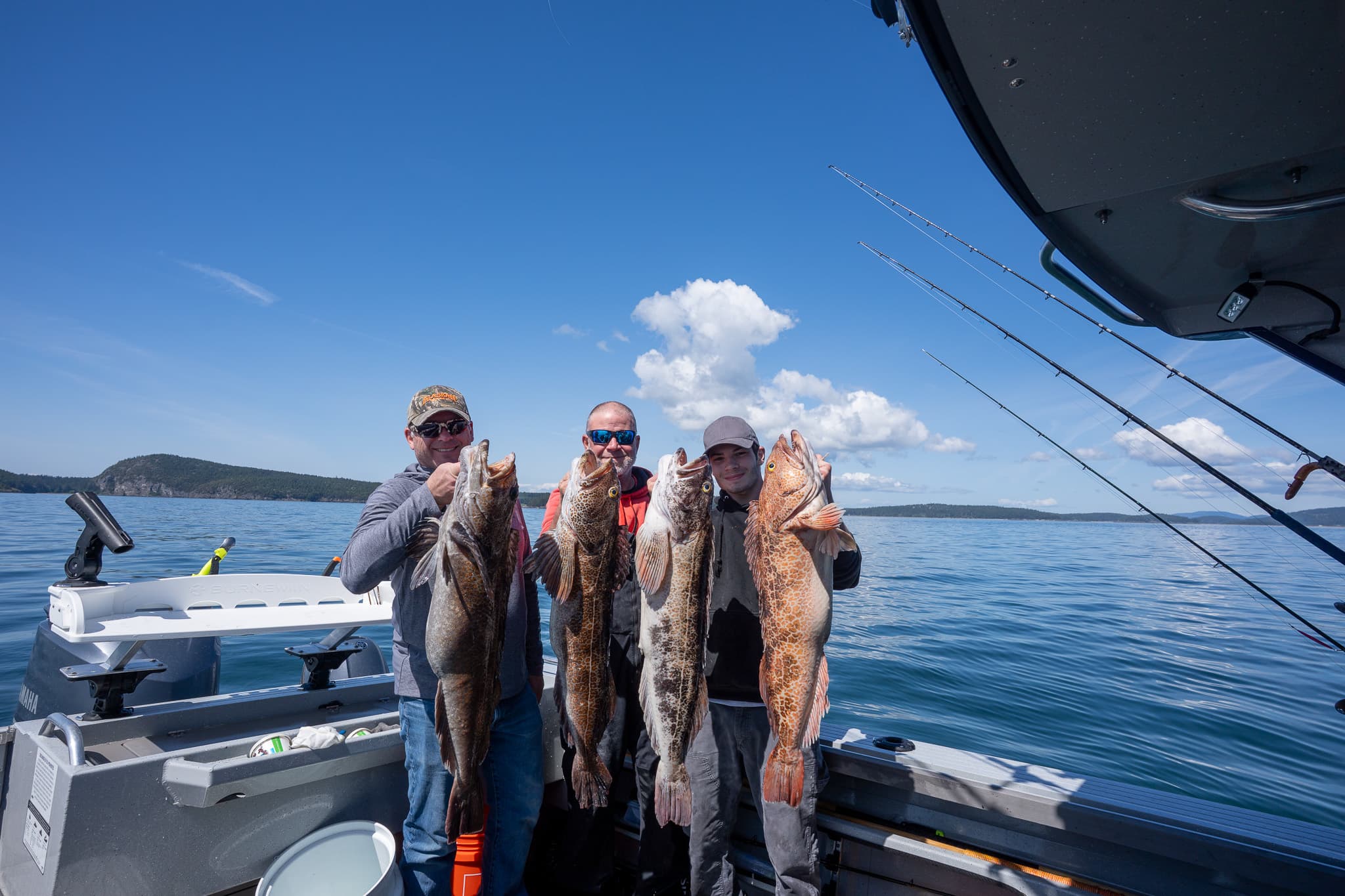
Halibut, lingcod, and rockfish are the top three species of bottom fish here in the Pacific Northwest.
There are three main methods for targeting bottom fish, and the cool thing is that the tactic you use is more dependent on the depth and environment you’re fishing in, rather than the species itself. All species can be found in virtually any depth in the ocean. In fact, many of the biggest lingcod I have ever caught have been in less than 50 feet of water. This means that if you know your water, you can choose a tactic that will give you the best chance at success.
Tactic number one: Live bait rigs. Live bait is the most natural presentation to a fish. As the name implies, you need an actual prey item connected to your hook, and this often elicits the most aggressive feeding response. The flip side is that you have to spend considerable time catching bait. Additionally, it can be difficult to keep your bait alive throughout the day. I have found that live bait rigs work best when targeting ling cod on reefs that are under 150’ deep.
Ling cod will readily take live bait of nearly any size, and often do not even need to be hooked to bring them to the boat. To decide between large and small bait, know your area. If you are fishing a particularly busy reef with lots of rockfish, and you are not allowed to keep them, try to use larger baits such as greenling or other sculpin to keep bycatch to a minimum.
The best live bait rig I have ever seen, I learned from John Kerrigan of Seeking Limits Guide Service out of Everett, WA. John’s rig is devilishly simple. It consists of a sliding weight system where the plastic slide is connected to the weight with a rubber band, and it is stopped by a swivel to a leader (photo below). The rubber band keeps you from losing an entire rig if your weight gets stuck, and the swivel will keep the live bait tangle-free. Give it a try with surf perch on a single hook rig, or sand dabs and greenling on a double hook rig.
The second bottom fishing method is jigging with soft plastics. This method allows you to go right out to the fishing grounds. Oftentimes, the soft plastic jigs come pre-rigged, so all you have to do is tie them onto a 50-pound mono leader and drop it near the bottom. My absolute favorite for jigging soft plastic is a Fisherman’s Gold Electric Eel jig. (photo below). It has caught absolutely everything from giant 50-pound lingcod to limit after limit of rockfish. The only consideration is how heavy and how big you want your plastic. Obviously, using a 32 ounce 12 inch eel won’t be the right choice for rockfish, but if you’re shallow, there is little better than catching black rocks on a 1 or 2 ounce eel. Fishing soft plastics is the most versatile of the 3 methods. You can fish them light or heavy, large or small, shallow or deep. Soft plastics can struggle in areas of intense pressure and is most difficult in areas where there are lots of toothy bycatch, such as arrowtooth flounder or dogfish that can tear up your bait.
The last method is a combination of pipe jigs and unweighted soft plastics on a ganoin type rig. This method is great for deep drop fishing, particularly for halibut. The pipe jig not only allows enough weight for a rig in 500 feet of water, but it also can get chewed on for hours and not lose its efficacy. By running some unweighted plastics above the pipe jig, you can also take advantage of the extra color and action to bring fish to your rig. However, this method is really prone to snags, and can be expensive to lose if you are fishing the more shallow rocky reefs.
I typically pair this method with electric reels in deep water and on flatter bars in the open ocean. You can build a ganoin by using a 3-way swivel connecting the main braided line to one end, a 6 foot ganoin of heavy mono (80 pound or heavier) to one of the other sides, and lastly a short heavy mono leader connected to a large 12/0 J hook that you hook your eel or flounder plastic to.
Making a game plan for your specific environment is the best way to set yourself up for success. Always consider the time you have to fish, the depth at which you want to target, and the overall fishing pressure to help you decide between durable baits like pipe jigs or if a natural live bait is the right choice. Get out there and try it for yourself!