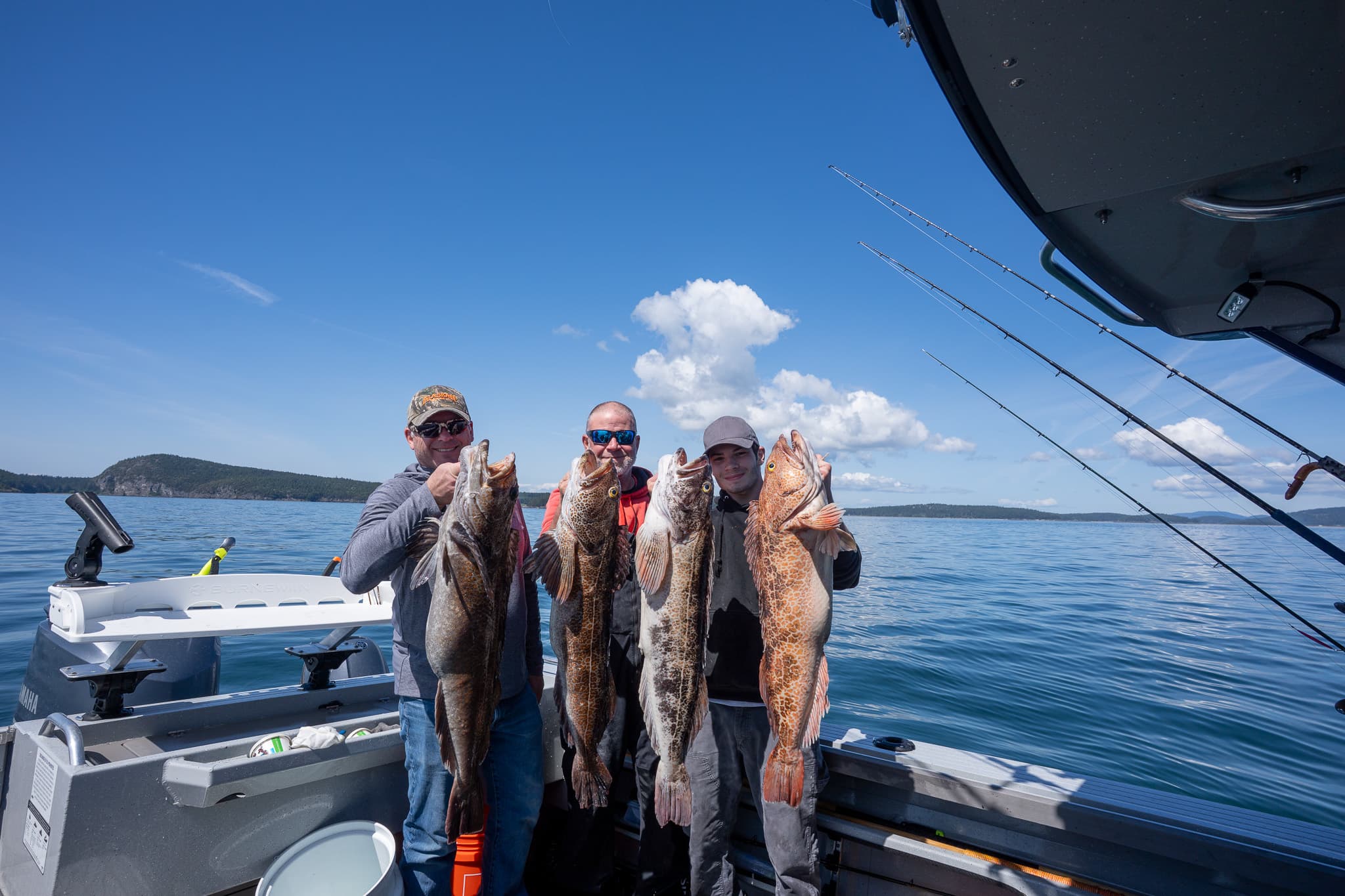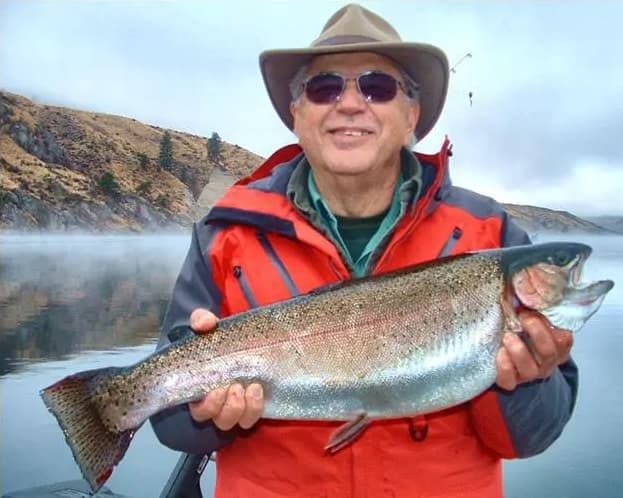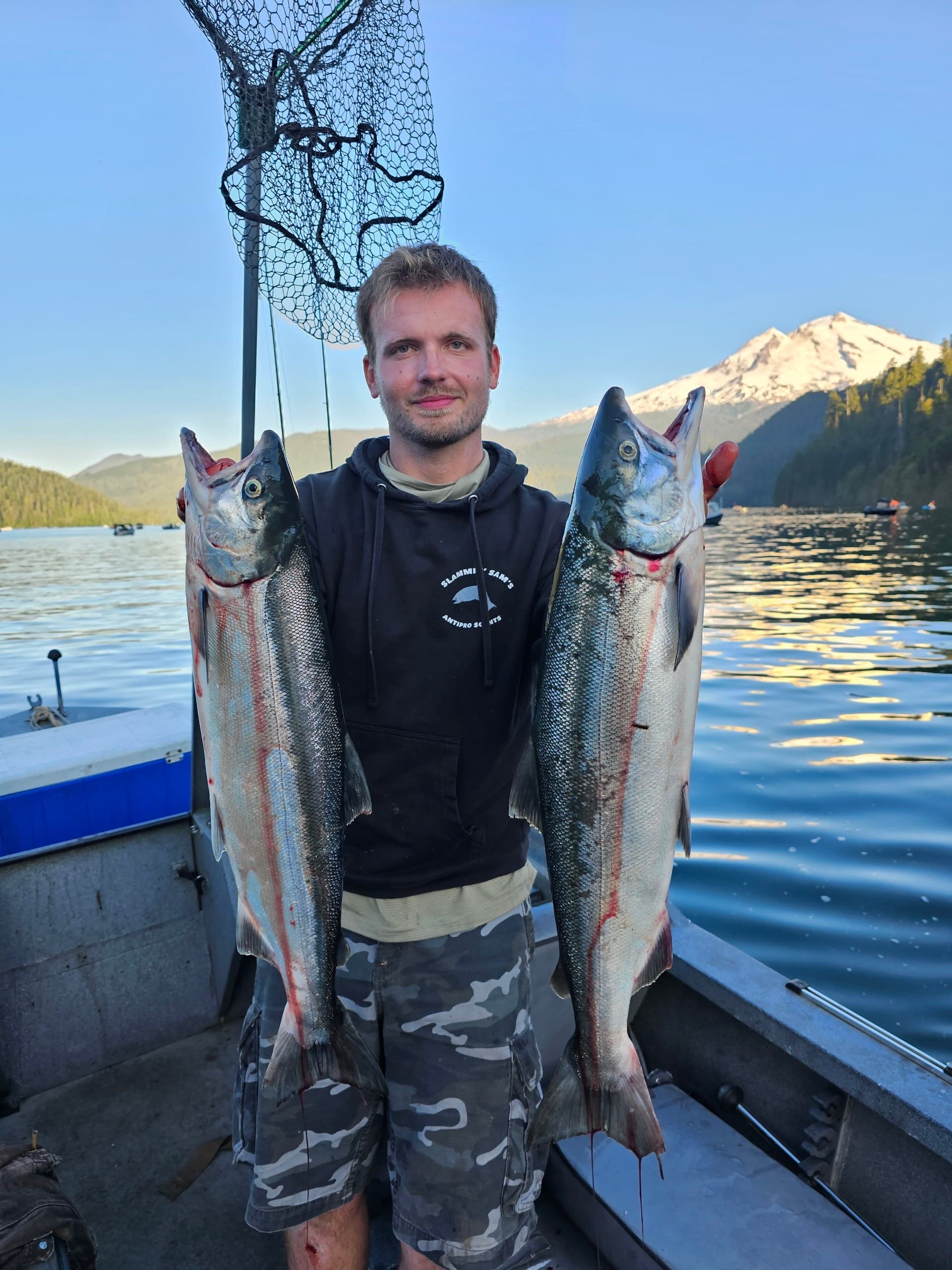
The temperature and the sunshine won't be the only things that're hot this summer. Every year in July and August, Sockeye fever hits Washington. I'm sure you've scrolled through social media this time of year and seen glory shots of the delicious red-meat salmon limited out on your feed. While some of us make it look easy, there is definitely a learning curve that leaves many anglers scratching their heads.
For those who don't know what a Sockeye is, I'll give a brief biology lesson. Sockeye are one of the 5 species of Pacific salmon we have here on the West Coast. They start their lives in cool, clear waters, often adjacent to a large lake. What makes Sockeye unique is that they use a nursery lake to rear for about 2 years before heading to the ocean.
These Sockeye make up the majority of their diet of shrimp, krill, and plankton, which give them that delicious sought-after meat. After 3 to 5 years (most Sockeye return at 4 years old), they return to the rivers where they were born. While there are a handful of naturally occurring Sockeye populations in Washington, the main ones that I will focus on are the Columbia River, Baker Lake, and Lake Wenatchee. Most of these fisheries target Sockeye trolling from a boat. However, bank anglers do have success plunking spinning glows and shrimp close to shore in certain areas of the Columbia and Skagit Rivers.
The Columbia River:
These fish start crossing over Bonneville Dam in Late May and early June, with the run peaking there around the 1st of July. Most of the fish are destined for the Okanogan River, Lake Wenatchee and Redfish Lake on the Snake River, with a handful going up Yakima and Deschutes rivers.
As they make their way upriver, they can be targeted at several different areas, including below Wanipum Dam, Wells Dam, and the ever-popular Brewster pool. The Brewster pool is where the fleet will fish for the majority of the season and for good reason. All the fish in this upper reach of the river are headed up the Okanogan River and into lakes in Canada.
The Thermal barrier:
Sockeye do not like to slow down for anything. The only times they really stop are when they make it to their home lake, have to cross a dam, or encounter some type of obstacle. In this case, it's what we call the thermal barrier. You see, when the Okanogan gets above 70 degrees, the sockeye will stay down in the cooler Columbia, making them sitting ducks until cooler waters prevail. Most years, the thermal barrier will set in by mid to late July, but varies depending on snowmelt and weather temperatures. The last couple of years, the thermal barrier was set right from the get-go, and this year looks no different. You can find the Okanogan River temperature on the USGS river flows site.
The Brewster 500:
You will not get solitude up in Brewster, but you will find great fishing. Most of the boats will fish right at the mouth of the Okanogan, but if you want fewer boats, you can fish down by the pump house. There is a nice shelf there, and the fish will sit all throughout there up to just above the Okanogan.
To target these fish, I like to run a size 0 dodger in either chrome, chrome/ silverscale, or moon jelly. Followed by a Mack's Lure smile blade, 3 red beads, and a coon shrimp. I will run anywhere between a 12 and 16-inch leader, with 14 being my sweet spot. I recommend either a 2 or 3 single hook setup tied with 2/0 hook or 1 single and a size 4 to 6 treble for a trailer.
These will generally be 10 to 25 feet deep and can be targeted with either lead balls or with downriggers. You'll want to troll slowly for these fish, often 1 mph or less going up river. Remember to speed up a bit going downstream. Levels and flows change throughout the day, so pay attention to the action of your gear. You want a side-to-side action on your dodger. If it starts to turn over and do a figure 8, then you are going too fast.
Here are a few things to note here fishing Brewster. It gets HOT! Temperatures are normally in the 90s and triple digits. Drink plenty of water and wear appropriate sun attire. When fishing the Brewster pool, keep your head on a swivel. It's literally combat fishing with boats. Know your limits. If you're not comfortable with the main pool, don't be afraid to fall back to less crowded areas. Be mindful when parking your boat on shore. The Columbia River is dam-controlled, and water levels fluctuate rapidly, sometimes within minutes. Every year, boats get left high and dry.
Baker Lake:
Ah, the Westside's beautiful Baker Lake. I remember the days of plunking for sockeye on the Baker River. Back then, a Sockeye fishery in Baker Lake was just a wishful thought. Finally, in 2010, after some hatchery and smolt collection improvements, the Baker Lake Sockeye fishery was born and has been an absolute hit ever since.
This year, there are 60,000 sockeye forecast to the Baker River, and as of the time of writing this article, there have already been a bunch trucked up to the Whatcom County lake. The Sockeye here are big, bright, and fight hard!
As I talked about with Brewster, you'll be slow trolling with dodgers for these guys. Here is a rundown on the gear I use to consistently put Socks in the boat. I like to run either a size 0 or 00 dodger in Chrome, chrome/ silver scale, purple haze, 50/50, or moon jelly.
Sometimes, I will put a slight bend in the dodger for a little more thump. Hoochies work very well at Baker, with orange, purple, and pink being my go-to's. I run a Macks Lure Smile Blade above them and tip my hooks with pink coon shrimp soaked in Slammin Sams XXX. Sometimes I will also run just a smile blade and beads, as well as just bare red hooks.
I tie all my leaders with 8 to 10 inches of 20 to 30lb fluorocarbon. Any lighter and these crazy fish snap it like it's nothing. There are 2 main areas where people fish here. Down near the dam and up lake in the old Baker Lake bed. Don't be afraid to move around and hunt for these fish, as they will move around to get away from pressure.
Troll .7 to 1.2 mph and watch your fishfinder for cruising sockeye. Typically the fish will hang anywhere from 20 to 60 feet down and are best targeted with downriggers or 6 to 12 oz of lead. There are 5 boat launches to choose from. Starting at the dam with Kulshan, Horseshoe Cove, Panama Point, Swift Creek, and Shannon Creek at the far end. In past years, Shannon Creek has been restricted to campers only. This is a fun fishery and should be good right from the get-go on July 12th when it opens.
Lake Wenatchee Sockeye:
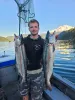
Last but not least, my personal favorite fishery: Lake Wenatchee Sockeye! Watch the counts at Tumwater Dam. Once we've reached our escapement goal of 23,000 fish plus several thousand for harvest, WDFW will open the lake by emergency rule. This will usually be in either late July or early August. For gear, keep it stupid simple. 2 or 3 bare red hooks behind your dodger on a short leader, 8 to 10 inches. Shorter is always best at Lake Wenatchee. Check the regulations, as here it is no bait and single barbless hooks. The wardens are normally out in force. For depth, the fish here are much deeper. I usually catch them at 30 to 50 feet early on, and later in the season, I'll fish as deep as 115 feet down. Trust your electronics! Also, be mindful of the wind out here. It blows more often than not and gets extremely rough!
Good luck out there, and if you're feeling ambitious, I recommend hitting all 3 fisheries!